
The Pipe Is Fixed. Is Your Home Still Wet?

The plumber points to the repaired pipe under your Los Angeles kitchen sink: it’s ready. But the cabinet toe-kick is wet, and so is the wall beside it. Before the plumber leaves, you ask whether there’s anything else to check. There is: the repair addresses the pipe, not whether water has reached materials that still need to be dried.
A sound pipe and a dry home are separate outcomes. Even if the leak has stopped and the floor looks clear, soaked cabinets, drywall, or flooring may need a water-damage assessment.
Pipe fixed, but materials still wet?
Learn how Blue Waves Restoration assesses water damage that may remain in cabinets, walls, and floors.
Once the supply is off, coordinate the two jobs
If you haven’t already, shut off the water supply when you can do so safely. Stay out of areas where water has reached outlets, appliances, or other electrical equipment; don’t step into a wet area to investigate a circuit or unplug something. Arrange for a plumber to repair the burst pipe. If building materials were soaked, you can also request a water-damage assessment from Blue Waves Restoration without waiting for the plumbing visit to end.
That division of work matters during an emergency pipe burst repair. The plumber can locate and fix the failed pipe and tell you what they observed when they opened the area. Our 24/7 water-damage response focuses on where the released water went and what the affected materials need. We don’t need to assume that a plumbing repair solves the moisture problem—or that every wet surface must be removed.
A clear floor doesn’t answer where the water went
Water from a burst pipe can follow the base of a wall, soak into drywall near the floor, or collect behind a cabinet toe-kick. It may move beneath flooring at the edge of the room while the visible surface starts to look normal. Depending on the layout, it can also reach an adjoining room or, in a multi-unit property, a neighboring space.
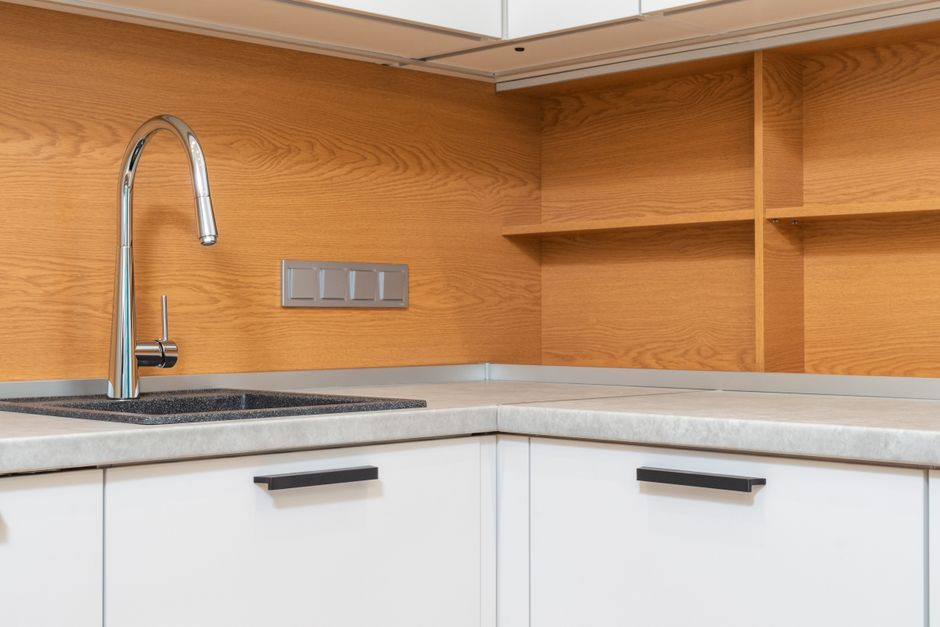
None of those paths is a certainty in your home. The point is that a missing puddle cannot confirm the wall cavity, subfloor, or cabinet base is dry. Wiping up what you can see is useful, but deciding whether anything remains wet calls for checking the materials the water may have reached.
Use the plumbing handoff to flag what needs checking
Before the plumber leaves, note where the break occurred and what was wet when you found it. If you’re a landlord or property manager, ask occupants whether dampness appeared in an adjacent room or unit. You don’t need to open walls yourself to pass along useful information.
- Wet building materials: Tell the restoration team about damp drywall, baseboards, flooring, or cabinet bottoms, even if standing water is gone.
- Water near electrical equipment: Keep clear of the wet area and tell the plumber and restoration team where you saw the water; don’t enter it to check for damage.
- Spreading or adjacent dampness: Point out any newly wet area beyond the room with the broken pipe, including a shared wall or neighboring unit.
- The plumber’s findings: Ask where the pipe broke, what areas were exposed during repair, and whether water was seen traveling beyond the opening. Pass those details to the restoration team along with what still looks or feels wet.
These observations help us decide where to assess moisture; they aren’t a diagnosis by themselves. If you’re unsure whether a material was affected, tell us what you noticed rather than assuming it has dried.
Let the assessment set the scope of the response
We assess the affected area and check where moisture remains before deciding what work is warranted. If water is still present, extraction may be needed. Where materials can be dried in place, the response may involve targeted drying and monitoring to confirm progress. If a material cannot be dried adequately or access is needed to address moisture behind it, selective removal may be necessary.
The extent of wet material—not the mere fact that a pipe burst—drives that decision. Assessment helps avoid both extremes: closing up a damp area because the surface looks fine, or tearing out materials without establishing why removal is needed.

Don’t let the repaired pipe be the only finish line
Once the plumber has restored a sound pipe, the water-damage job is finished only when affected materials have been assessed and confirmed dry. Don’t wait for visible mold or planned cosmetic repairs to decide whether a wet wall, cabinet, or floor needs attention. If materials in your Los Angeles-area home were soaked, contact Blue Waves Restoration for prompt, 24/7 water-damage help while you coordinate the pipe repair.
Don’t leave soaked materials unchecked
If a burst pipe soaked your Los Angeles-area property, contact Blue Waves Restoration for 24/7 water-damage help and an assessment of what needs attention.


